
About Us
The argument in favor of using filler text goes something like this: If you use real content in the Consulting Process, anytime you reach a review point you’ll end up reviewing and negotiating the content itself and not the design.
FSSAI Registration for Home Food Business 2026: New Rs 1.5 Crore Limit, No Renewals, Simple Steps
FSSAI Registration for Home Food Business 2026: New Rs 1.5 Crore Limit, No Renewals, Simple Steps
FSSAI Registration for a Home Food Business, Step by Step
If you make food at home and sell it, whether cakes, pickles, sweets, snacks or tiffin meals, you need FSSAI registration. A shop is not required; the kitchen at home is the premises. The good news is that basic registration is cheap, is done online, and under the current rules it does not need renewing. Once you are registered, the restaurant automation guide shows what to set up next.
Which FSSAI registration category a home kitchen falls into
FSSAI decides the category by annual turnover. From 1 April 2026, FSSAI’s revised thresholds are:
| Category | Annual turnover |
|---|---|
| Basic registration | Up to ₹1.5 crore |
| State licence | Above ₹1.5 crore, up to ₹50 crore |
| Central licence | Above ₹50 crore |
The old limit for basic registration was ₹12 lakh, so many home businesses that used to need a state licence now only need basic registration. Almost every home food business fits here.
No renewals, but the annual fee stays
Any registration or licence issued on or after 1 April 2026 has perpetual validity, as FSSAI confirms in its official clarification. There is no expiry date and no renewal application.
Two things have not gone away. The government fee for basic registration is ₹100 per year, and it still has to be paid every year to keep the registration active; non-payment can lead to suspension. And the registration stays valid only while the kitchen keeps following food safety rules. If your certificate was issued before April 2026, log in to FoSCoS and check its validity and fee status.
Agents often charge ₹999 to ₹3,000 or more for basic FSSAI registration. That is their service charge, not a government fee. You can do it yourself.
What to keep ready before you start
- Photo ID and a recent photograph, as clear scans or phone photos
- Proof of address for the kitchen, if your state asks for it
- A mobile number for OTP and an email address
- The exact list of food items you make
- A rough estimate of yearly sales, to confirm you are under ₹1.5 crore
FSSAI registration on FoSCoS, step by step
- Open the official FoSCoS portal and choose to apply for a new registration.
- Select your state.
- Choose the kind of business. For most home sellers this is small-scale manufacturing or a small food business.
- Select every food category you actually make, such as bakery products, pickles, sweets or prepared meals.
- Enter your name, the kitchen address, mobile number and email, and verify the mobile with OTP.
- Describe the business plainly: what you make, how you make it and how you sell it.
- Upload the documents.
- Pay the fee online.
- Submit and save the application reference number.
- Watch your email and SMS. If the authority asks a question, answer quickly, because unanswered queries are the most common reason for delay.
- After approval, download the certificate with your 14-digit FSSAI number.
FSSAI registration mistakes that cause rejection or trouble later
- Selecting only some categories. Registering for sweets but also selling cakes or pickles creates problems, especially on delivery apps, which reject listings that do not match the registered categories.
- Using someone else’s registration. A relative’s old number is not valid for your kitchen. Register in your own name at your own address.
- Fake websites. Only use the official portal and check the government fee before paying anything.
- Going by old information. Advice about annual renewal or the ₹12 lakh limit is out of date for registrations issued from April 2026.
- Thinking FSSAI replaces GST. They are separate. FSSAI is about food safety; GST depends on your turnover and how you sell.
Labels and packaging once you are registered
Packed food needs a proper label: product name, ingredients, net weight, packing date, best-before date, your name or brand with address, and the FSSAI number. Bakery items should also mention allergens such as nuts, milk and gluten. Display the certificate where you cook or sell, and add the FSSAI number to your social profiles and to your WhatsApp catalogue, because customers buying home food look for it.
Keep the annual fee from slipping
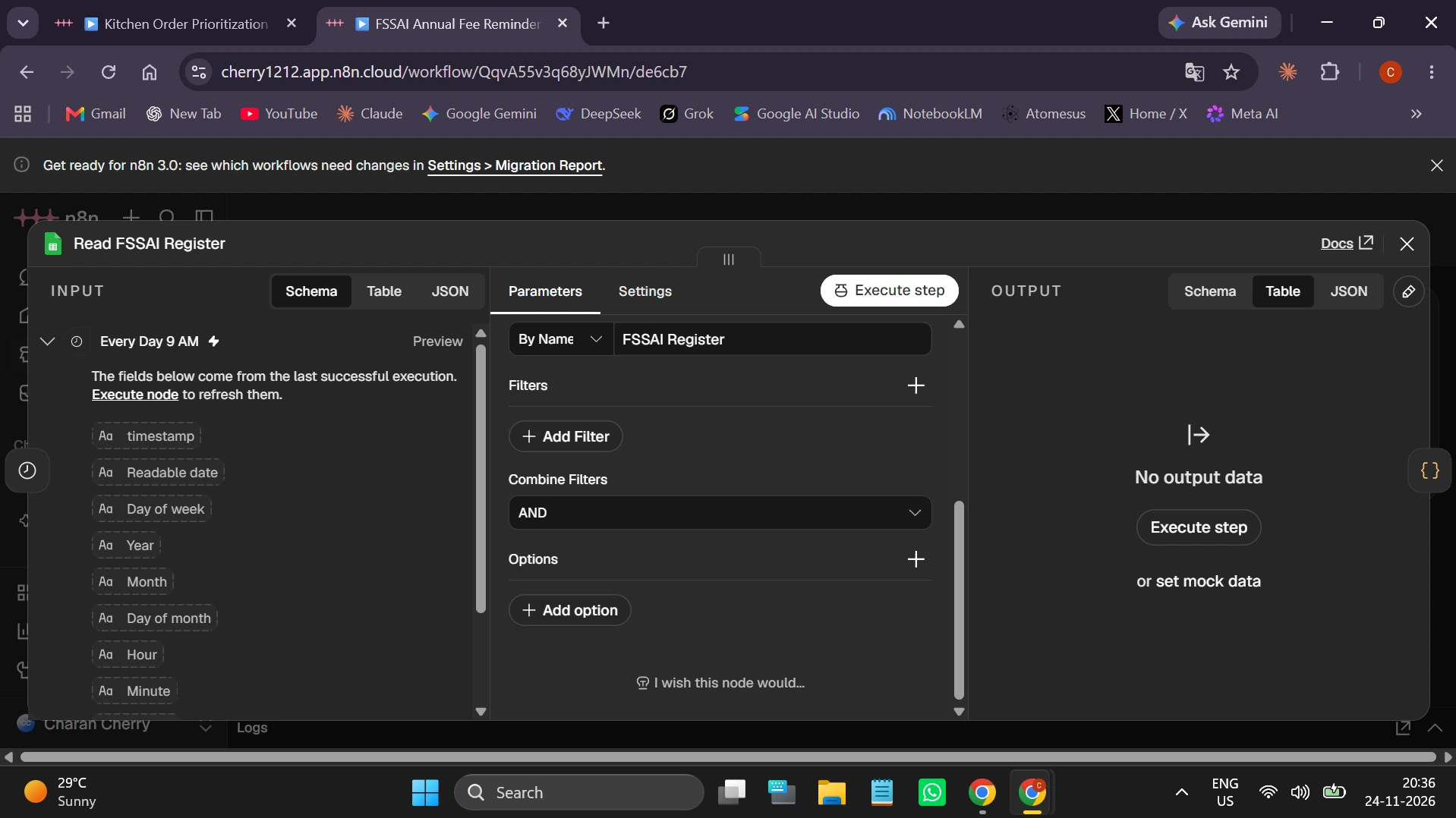
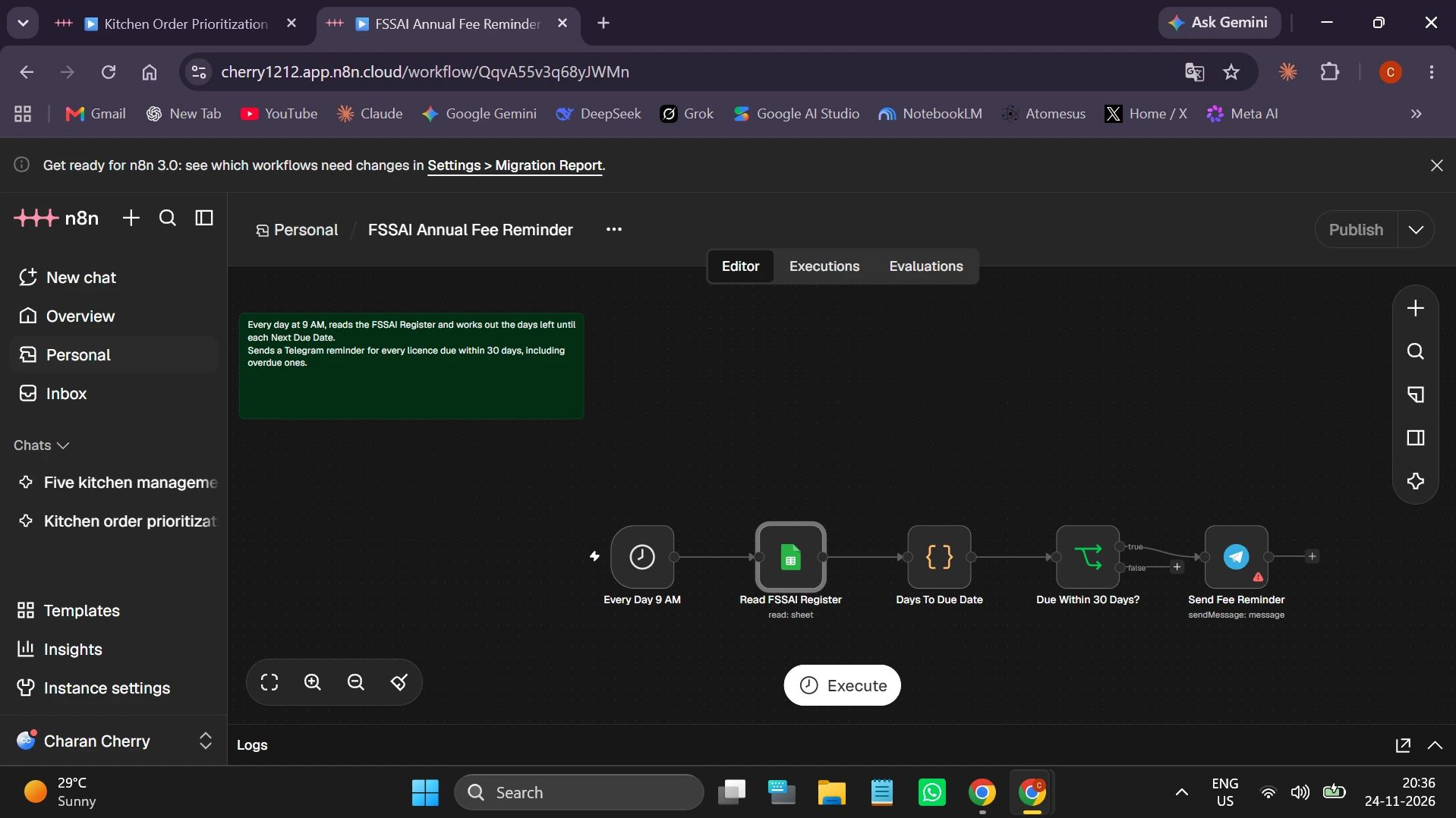
Because there is no renewal reminder any more, the annual fee is easy to forget. The simplest fix I set up for home businesses is a one-tab Google Sheet with the FSSAI number, the date the fee was last paid and the next due date, plus a calendar reminder 30 days before. Anyone already keeping a sales sheet can add these three columns to it.
Once FSSAI registration is done, the business side gets easier to plan. Home bakers can move on to scaling recipes with baker’s percentage for bigger orders, and sweet sellers can use festival demand forecasting to plan the season. If you are unsure which category fits your kitchen, check your yearly sales against the table above before you apply.

I am Radhakrishna, Founder and lead author at UpcomingTools.com, where I write Business Guides and Automation Guides for low investment automation in India. With 3 to 5 years offline experience serving small businesses only through trust and referrals, I now build software only workflows for lead follow up, bookings, quotes, stock, invoices and reporting and fix failed runs, expired tokens and unsafe AI and RAG answers. Every guide and workflow is written and decided by me, personally checked and live tested before publishing. I build in your own accounts on live, so your keys stay yours, show a rough demo before build and give 3 to 6 months free support with free tool help and ZERO SERVICE CHARGE for eligible starters.
1 Comment
[…] home food businesses that are just starting, sort out FSSAI registration for a home food business before any kitchen tech. If festivals are your biggest weeks, our note on the local festival […]